

Jan H. Sachers
Nature’s Design and Early Adaptations
Since the beginnings of archery, most bows have been made from a single piece of wood. With the increasing spread of the yew (Taxus baccata) during the Neolithic period (see BOW 160), a material combining two essential positive properties became available in large parts of Europe. This wood combines a hard, dark heartwood, which is highly resistant to pressure and ideally suited for the inside of a long, slender bow, with a thin layer of softer, lighter sapwood on the back. Thanks to its tensile strength, this sapwood layer improves the bow’s performance and reduces permanent deformation due to string follow. In the Eurasian Steppe, where suitable bow wood was scarce, the use of laminated and backed bows likely developed as early as the third millennium BCE. The composite bow, made from a combination of horn, wood and sinew, had a characteristic reflexed shape (see BOW 161). Elsewhere, resourceful bowyers also sought to improve the performance and durability of their bows by combining different materials.
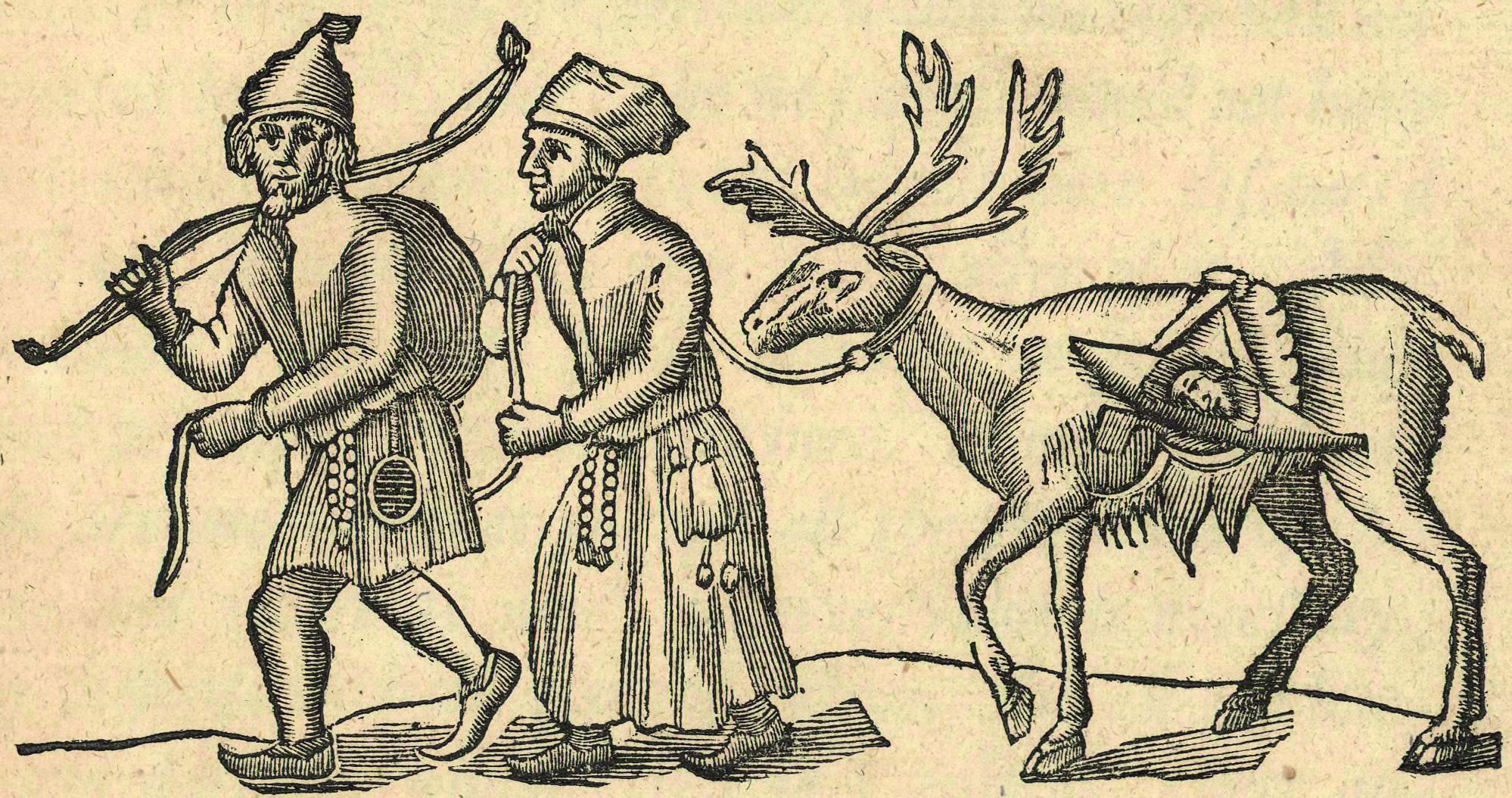
Tracing the Origins of the Two-Wood Bow
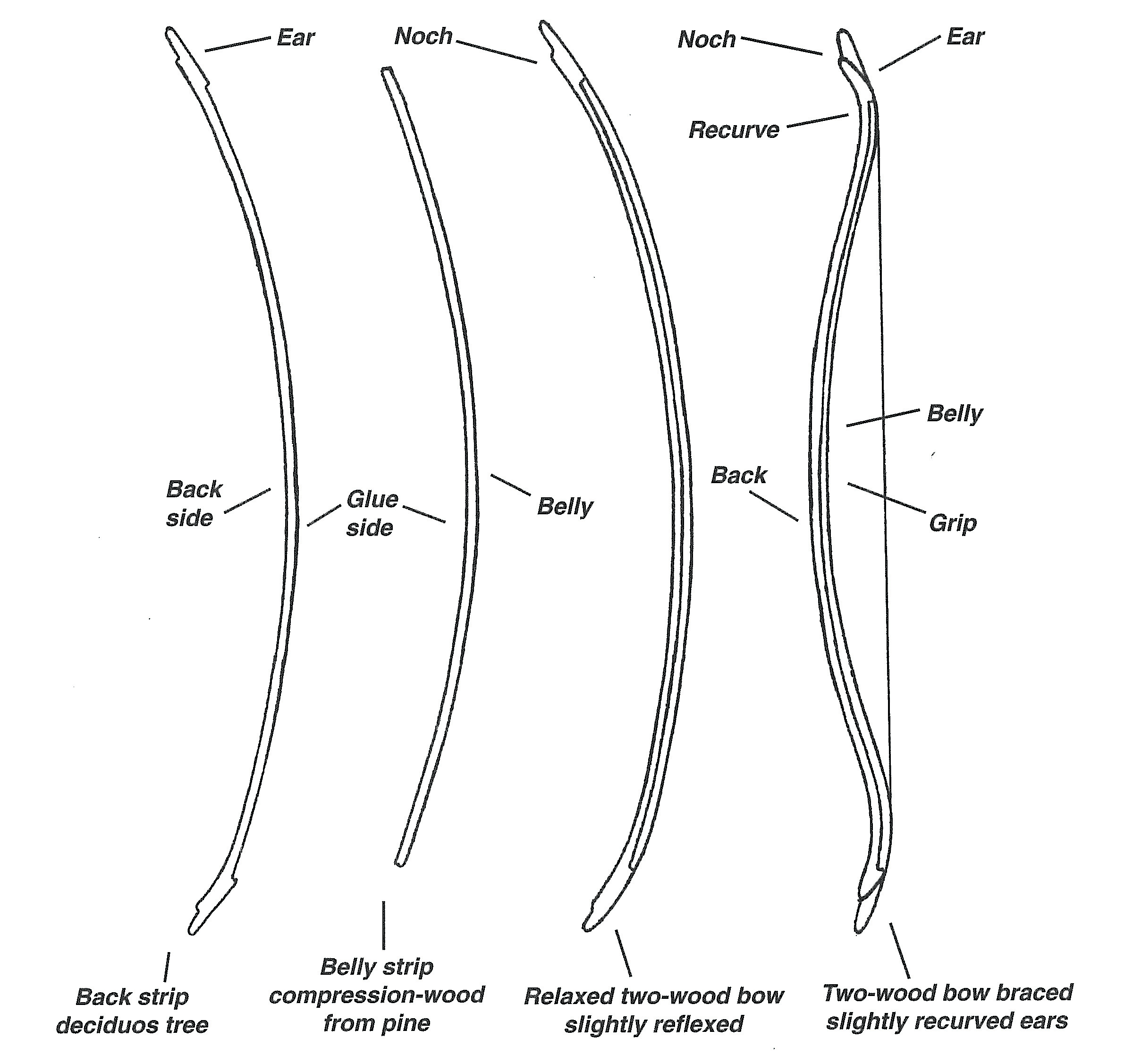
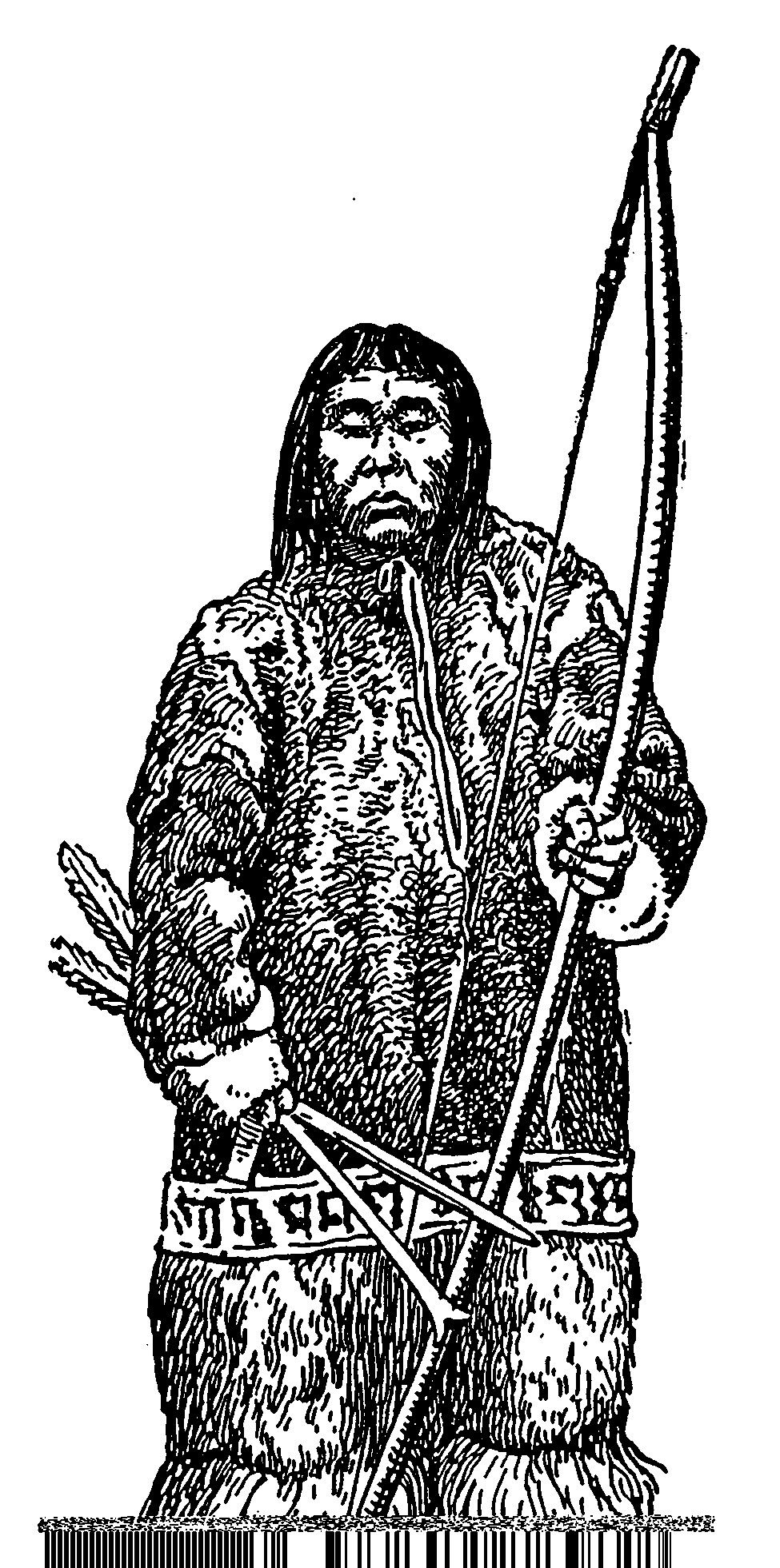
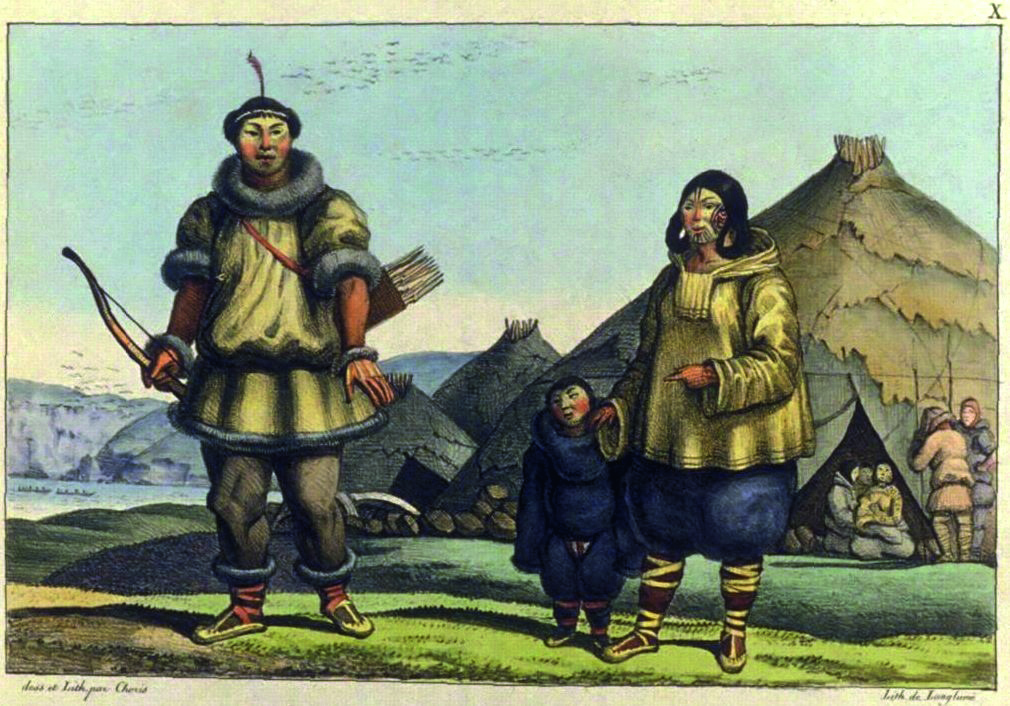
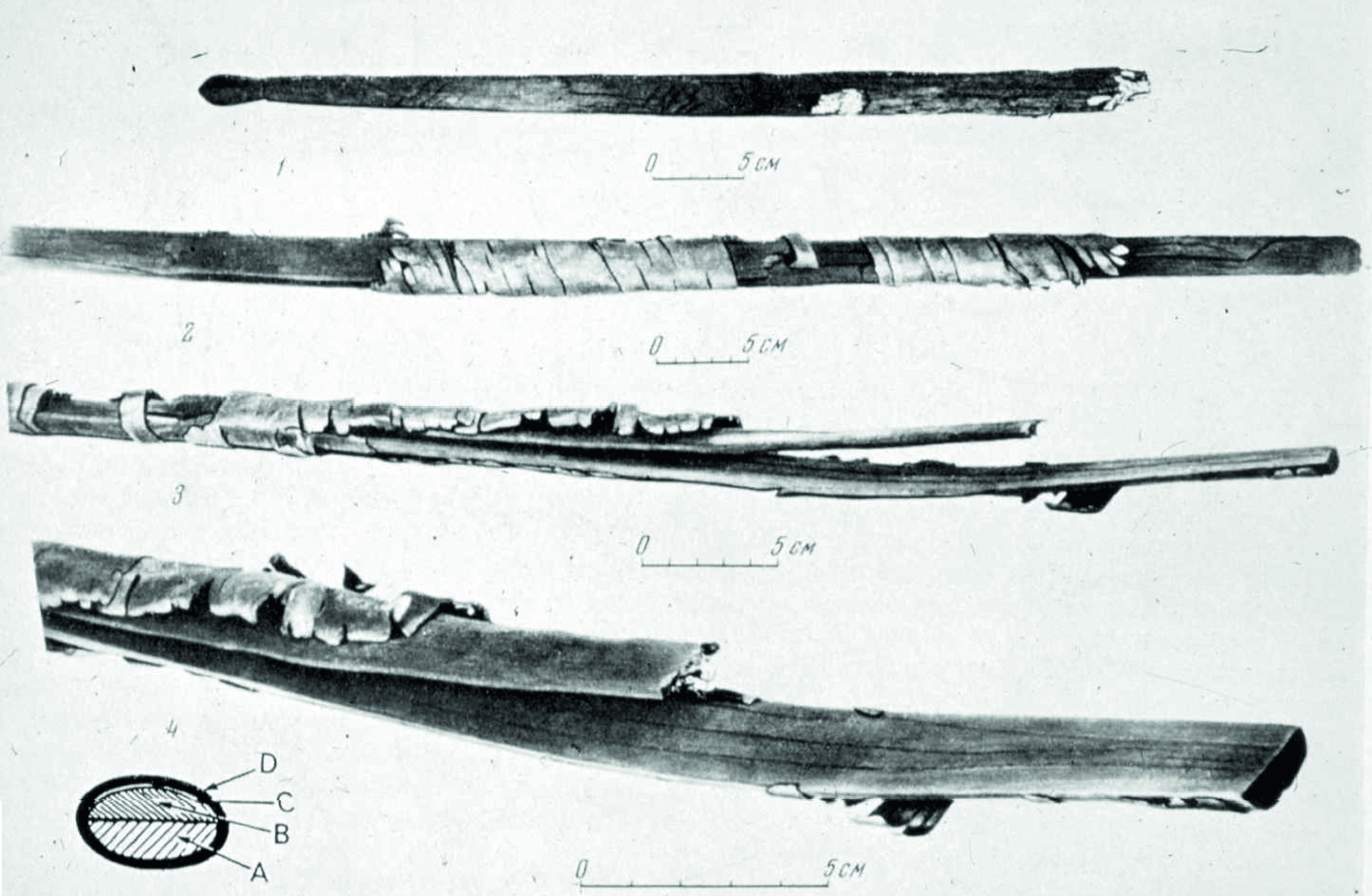
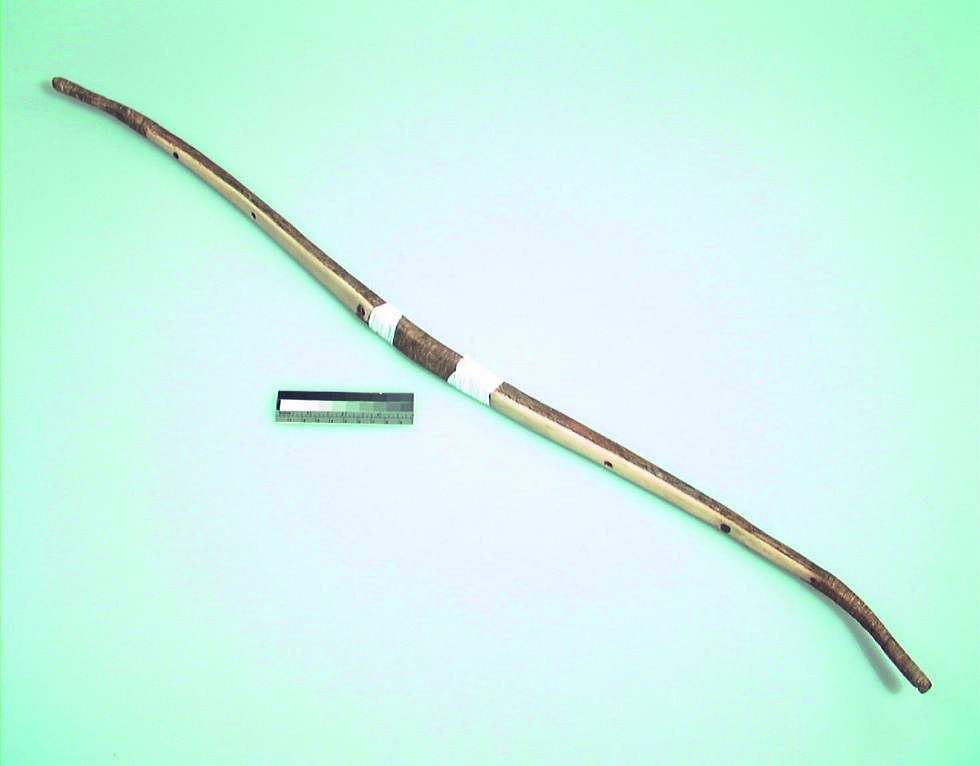
An obvious solution was to combine wood types with different properties. So-called “two-wood bows” were once widespread throughout Scandinavia and western North Asia. The back usually consisted of a thin strip of tensile-resistant wood, such as birch, with more or less sharply angled limb tips. A similarly thin strip of compression wood was glued onto this; this refers to wood that has grown denser and stronger than normal due to permanent one-sided stress on the tree, for example from growing on slopes or wind loads. To protect them from the elements, the bows were usually wrapped with birch bark. They are very likely depicted in cave paintings discovered in Sweden and Norway dating from approximately 6000 to 1500 BCE. Similar depictions from the Bronze Age (c. 1700–400 BCE) come from southern Sweden, southern Norway and Denmark. All the bows shown there exhibit the typical double curve and stiff, angled limb tips, indicating that they cannot be simple wooden bows. Two-wood bows are often associated with the Sami and other Finno-Ugrian peoples, but they were also in use beyond these groups and for a very long period. The German-Swedish scholar Johannes Scheffer described the Sami bow type as late as 1673 in his work Lapponia, which quickly gained widespread popularity and had been translated from Latin into French, English, Dutch and German by 1675. Archaeological finds of two-wood bows are rare; one example from Vibby Bog in Sweden is now in the National Museum of History in Stockholm (Inv. No. 167 22) and was successfully reconstructed by Ragnar Insulander in 1997. A two-wood bow from Novgorod (12th century), with a juniper belly and a birch back, was additionally reinforced with sinew on the back. Similar constructions are also documented among the Chukchi and other indigenous peoples in the far east of Russia.
Sinew, Horn and Wood: Designing the Laminated Bow
The idea of reinforcing the bow back with animal sinew appears to have spread independently at different times and in different locations. From the 18th century onwards, it was primarily the tribes of the North American plains who increased the draw weight of their bows in this way. Sinew overlay offered another important advantage, however: it allowed for the construction of shorter bows without compromising draw weight or draw length. This made them easier to use from horseback, using animals that the Plains Indians had recently acquired from white settlers. The process was laborious. After the leg or back tendons of buffalo or deer were removed and cleaned, they were first dried, then flattened and combed into individual fibres, which were then soaked in glue and applied to the back of the bow. After a long drying period, the tiller could be adjusted by scraping or sanding.
In the dry climate of the North American plains, the sinew and glue did not necessarily need to be protected by a covering. Instead, the bows were usually painted with traditional patterns and rubbed with heated animal fat. “True” composite bows made of horn, wood and sinew appear never to have been developed in what is now the United States. However, examples made of horn with sinew backings are documented. These usually extremely short bows were primarily made of mountain sheep horn but, according to reports, also of elk antler, buffalo horn and even buffalo rib. They were especially common among the tribes of the Plains and the Columbia Plateau, with those of the Sioux generally considered the best. Most surviving examples date from the 19th century, but the first horn bows were probably made even earlier, when the Sioux and other tribes first adopted the horse from Europeans. Laubin suggests that sinew backing was first applied to horn bows to prevent them from breaking and was only later used on wooden bows. A lack of good bow wood was certainly not the reason for making bows from horn, as it was readily available in a wide variety; the same tribes also used sinew-backed wooden bows, which were often no less effective.
Longbow Re-imagined
In large parts of Europe, the bow and arrow largely fell out of use by the end of the 16th century. Only in England did a gradual transition from weapon of war and hunting to sporting equipment take place, albeit not necessarily smoothly. The longbow, modelled on the English design (see BOW 162), became the gold standard in the European renaissance of archery from the late 19th century onwards, but it too had undergone considerable transformation in the intervening centuries. The enormous draw weights of the war bows from the Middle Ages and Renaissance were rather cumbersome for target shooting, so Victorian “leisure bows” were slimmer and usually a bit shorter. Horn nocks, which had originally served to reinforce the tips, were no longer strictly necessary but were retained as decorative elements and often intricately carved.
Since good yew wood had become difficult to obtain and therefore expensive, English and some European bowyers increasingly experimented with other woods. The first bows made of several layers of glued wood probably emerged around the turn of the 18th century. According to one theory, the Sami two-wood bows may have served as inspiration. The aforementioned work Lapponia by Johannes Scheffer enjoyed extraordinary popularity and widespread distribution during this period. While the construction of bows from laminated wood required additional work steps and a long waiting period for the glue to cure, it also allowed the use of woods that were generally considered inferior, as well as exotic woods. Particularly popular were lancewood (Pseudopanax crassifolius), lemonwood (Degame, Calycophyllum candidissimum), brazilwood (Pernambuco, Paubrasilia echinata), hickory and others. Besides their visual appeal, this also offered the possibility, as with the historical two-wood bow, of combining woods with different properties, thus not only matching but surpassing the shooting performance of traditional yew bows.
20th-Century Innovation: Modern Materials
In the 20th century, bowyers, especially in the USA, began experimenting with a wide variety of materials. Howard Hill used bamboo fibres and employed calfskin and “black fibre” (pressed paper) as backings. “Fortisan” was the brand name of a synthetic cellulose fibre developed by the Celanese Corp. for the production of parachutes, which was also used as backing by various bowyers. One particularly experimental bowyer and inventor was Frank Eicholtz, whose name is hardly known today but who probably had a greater and more lasting influence on the development of modern bows for traditional archery than anyone else. He achieved his first successes with backings made of “Lamicoid”, a rigid phenolic resin engraving material actually used for signs and lettering. From 1944 onwards, Eicholtz tried using fibreglass fabric in bow making but encountered problems with gluing. The use of the then revolutionary new epoxy resin finally proved successful, and switching from yew to maple as the core material further improved stability.
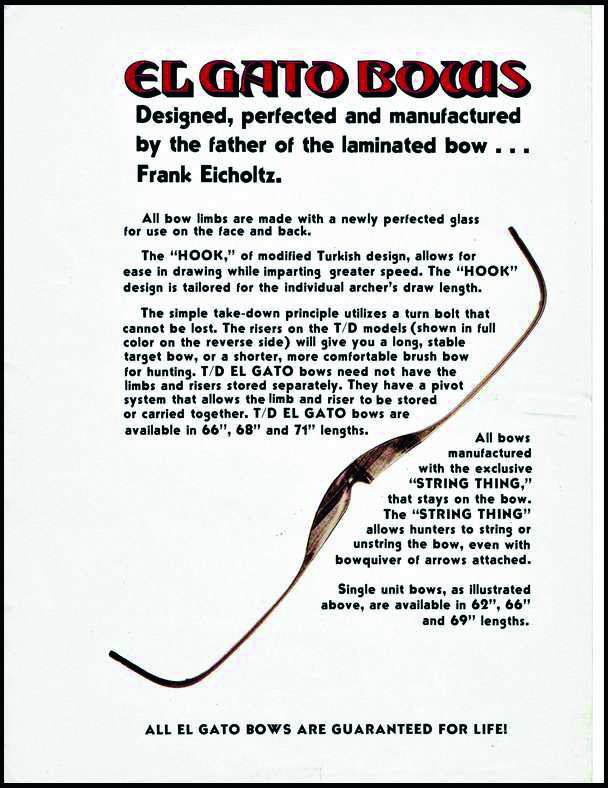
The use of laminates made it possible to deviate from the classic straight longbow shape and to test alternatives. Eicholtz drew inspiration from the form and function of historical composite bows and experimented extensively with various combinations of reflex and deflex, limb length and profile, grip shape and length, and virtually every other aspect of the design. To this end, he constructed moulds and developed methods for uniformly bonding the laminates at a constant temperature under high pressure. Processes he developed are still used in a similar form by virtually all mass-produced bow manufacturers today. The typical appearance of modern hunting recurves with pistol grips and sight windows is essentially due to Eicholtz’s efforts, and his company, El Gato Bows, even marketed three-piece takedown recurves. Other bowyers like Howard, Bear and Pearson recognised early on the potential of fibreglass-reinforced recurve bows, especially for American bowhunters, and soon developed their own models based on Frank Eicholtz’s revolutionary designs.
The Carbon Era: Development Continues
While fibreglass was considered the height of fashion in bow making in the 1950s and 1960s, a new material began to make waves in the 1970s. Carbon fibres, or simply carbon, were initially used primarily in aircraft and aerospace engineering. However, the ability to tailor tensile stiffness, tensile strength and breaking strength almost arbitrarily made this novel material attractive for many applications.
In the mid-1970s, the first bows with carbon layers in the limbs appeared on the market, including the now legendary Nishizawa TD11 and Yamaha YTSL II models. Manufacturers such as Samick, Hoyt, Greenhorn, Marksman and others followed suit over the course of the next decade. Initially, these were rather high-priced takedown bows for professional archery, but now bows with carbon reinforcement are also available at mid-range prices and even in the traditional archery sector. For example, most Korean “composite bows” today have a carbon fibre core.
However, it was the invention and spread of the compound bow (see BOW 163) and sighting devices, as well as the use of modern “space-age materials” such as fibreglass and carbon, that gave rise to the “traditional archery” movement in the USA in the 1980s, with its return to natural materials and historical bow designs. But even “traditional” bowyers cannot completely ignore technological developments, and they also enjoy experimenting. Even the Traditional Bowyer’s Bible lists fire hose, rubber mats from conveyor belts and similarly “exotic” materials as possible backings.
Technical development in bow making is also progressing steadily, and it remains to be seen which new materials will be used in the future to improve efficiency, arrow speed, draw weight or other properties. The endeavour to optimally utilise and combine the best available materials seems to be as old as archery itself.
References:
Bruno Adler: Die Bögen Nordasiens, in: Internationales Archiv für Ethnographie XV (1902), pp. 1-27.
Ragnar Insulander: The Two-Wood Bow, in: Acta Borealia 19,1 (2002), pp. 49-73.Reginald and Gladys Laubin: American Indian Archery, Norman 1980.
Images: Source – supplied by Jan H. Sachers