

Jan H. Sachers takes a journey to a world more ancient and mysterious.
Introduction
As weapons for hunting and warfare, bows and arrows played a significant role in virtually all ancient cultures. Some, such as the Scythians and Persians, were particularly renowned for the exceptional skills of their archers. It is therefore no surprise that bows and arrows are mentioned several times in the Bible, especially in the Old Testament, but a distinction must be made between descriptions of their actual use, and their mention in proverbs and metaphors.
The Old Testament comprises the holy scriptures of Judaism, the Tanakh, as well as other texts. The stories, which had been passed down orally for centuries, were written down predominantly in Hebrew, partly in Aramaic, from the 9th century BCE. Around 250 BCE, they were translated into Greek and supplemented with further books (the Septuagint). Since the 2nd century CE, the first translations into Latin are known, and the first complete Latin Bible translation (Vulgate) was written by the Church Father Jerome in the 4th–5th centuries.
Since the time of the Reformation, editions in vernacular languages began to spread, some based on the original texts, and others on the Latin version. These translations are still regularly revised and corrected today, and the Bible editions of the various Christian denominations differ not only linguistically, but sometimes also in scope and in the arrangement of their individual components. The multitude of available interpretations, as well as the differing views of linguists and theologians, do not always make the use of the Bible as a historical source easy or straightforward.
Note: All Bible quotations are based on the New King James Version.
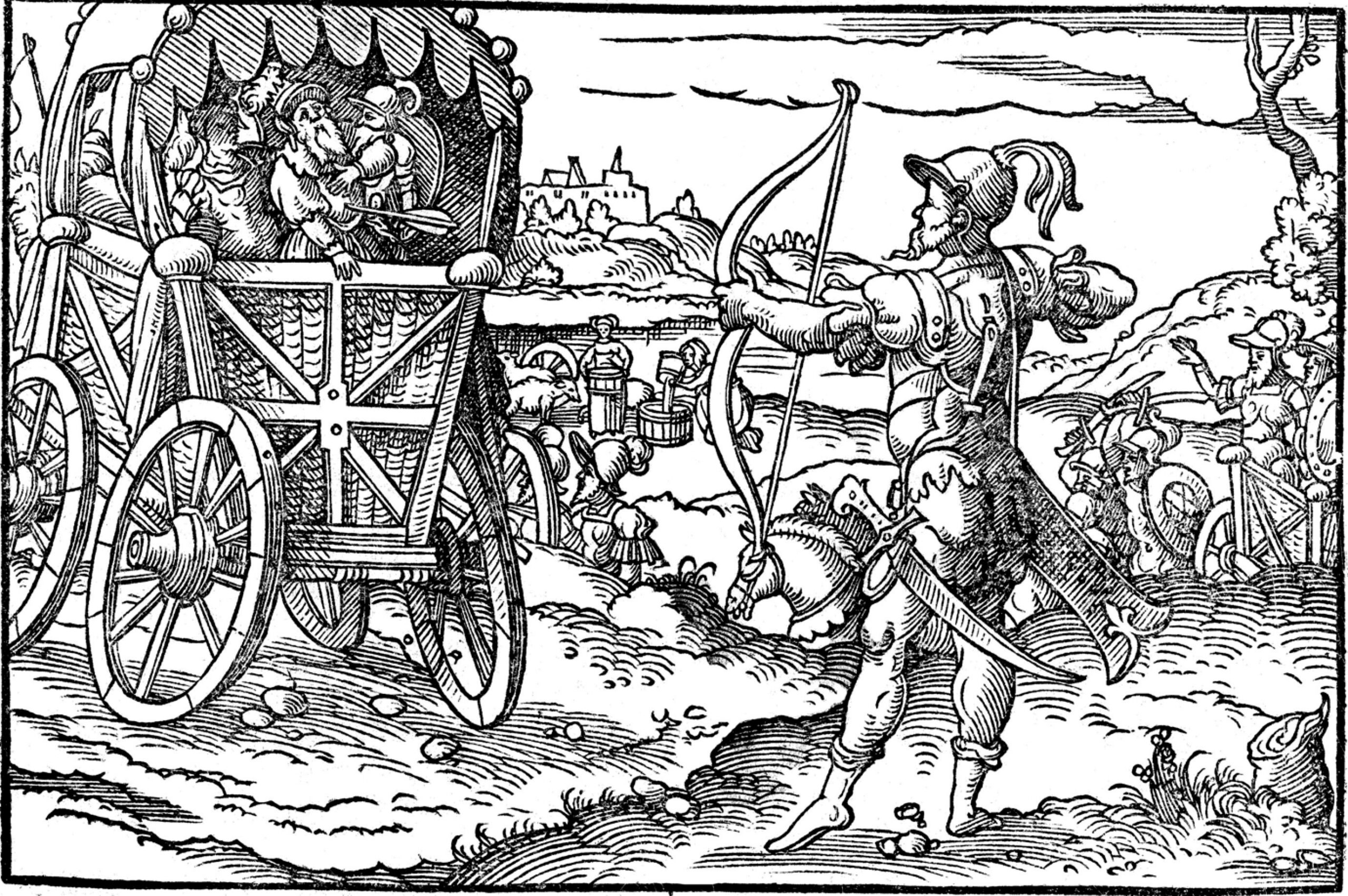
(Wikicommons, User: Hermann Junghans)
Bows and Arrows in the World of the Old Testament
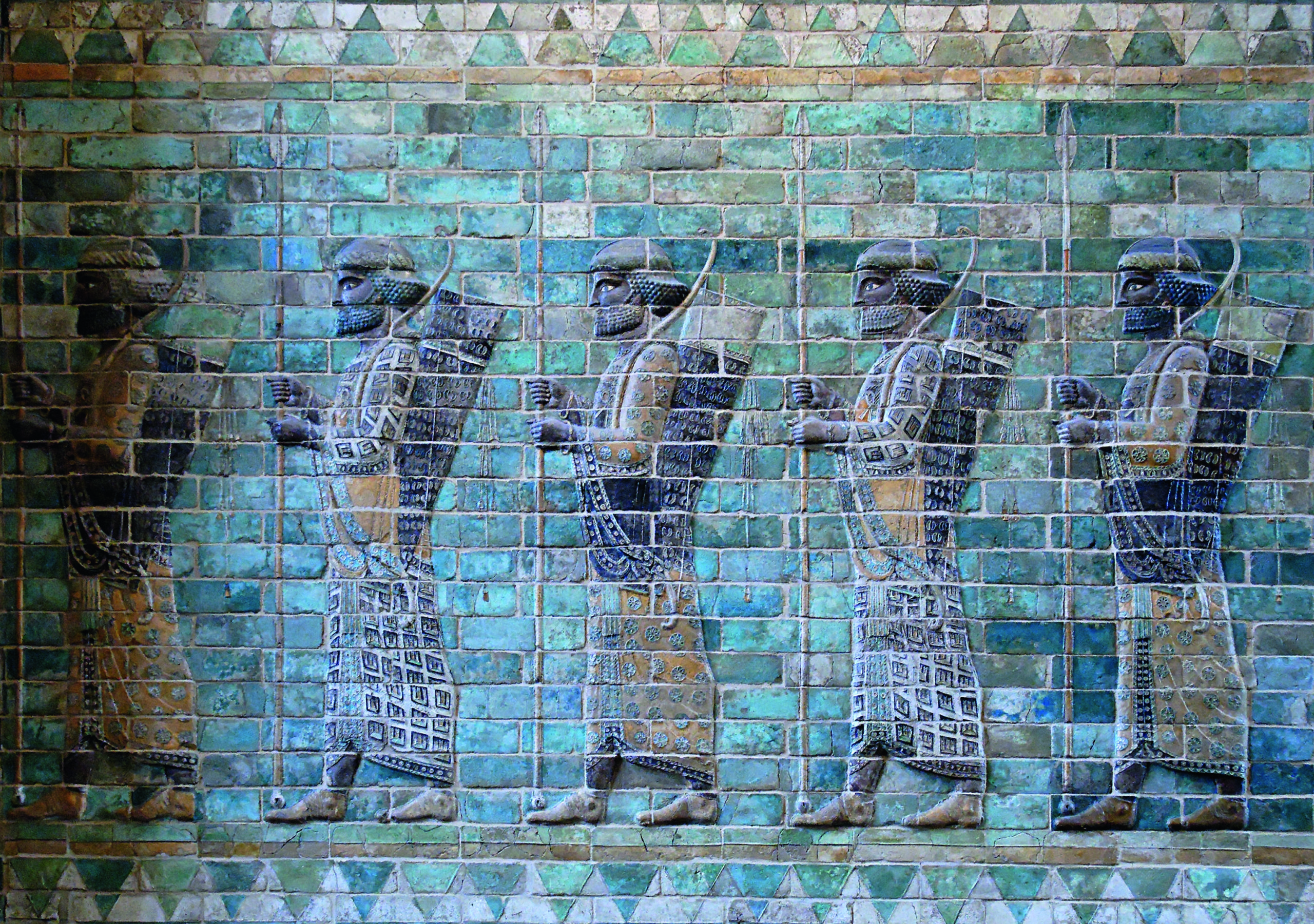
Various peoples famous and infamous for their archers are mentioned in the Old Testament. For example, regarding God’s punishment for the Tower of Babel, it says: ‘Behold, I will stir up the Medes against them, Who will not regard silver; And as for gold, they will not delight in it. Also their bows will dash the young men to pieces, And they will have no pity on the fruit of the womb; Their eye will not spare children.’ (Isaiah 13:17-18).
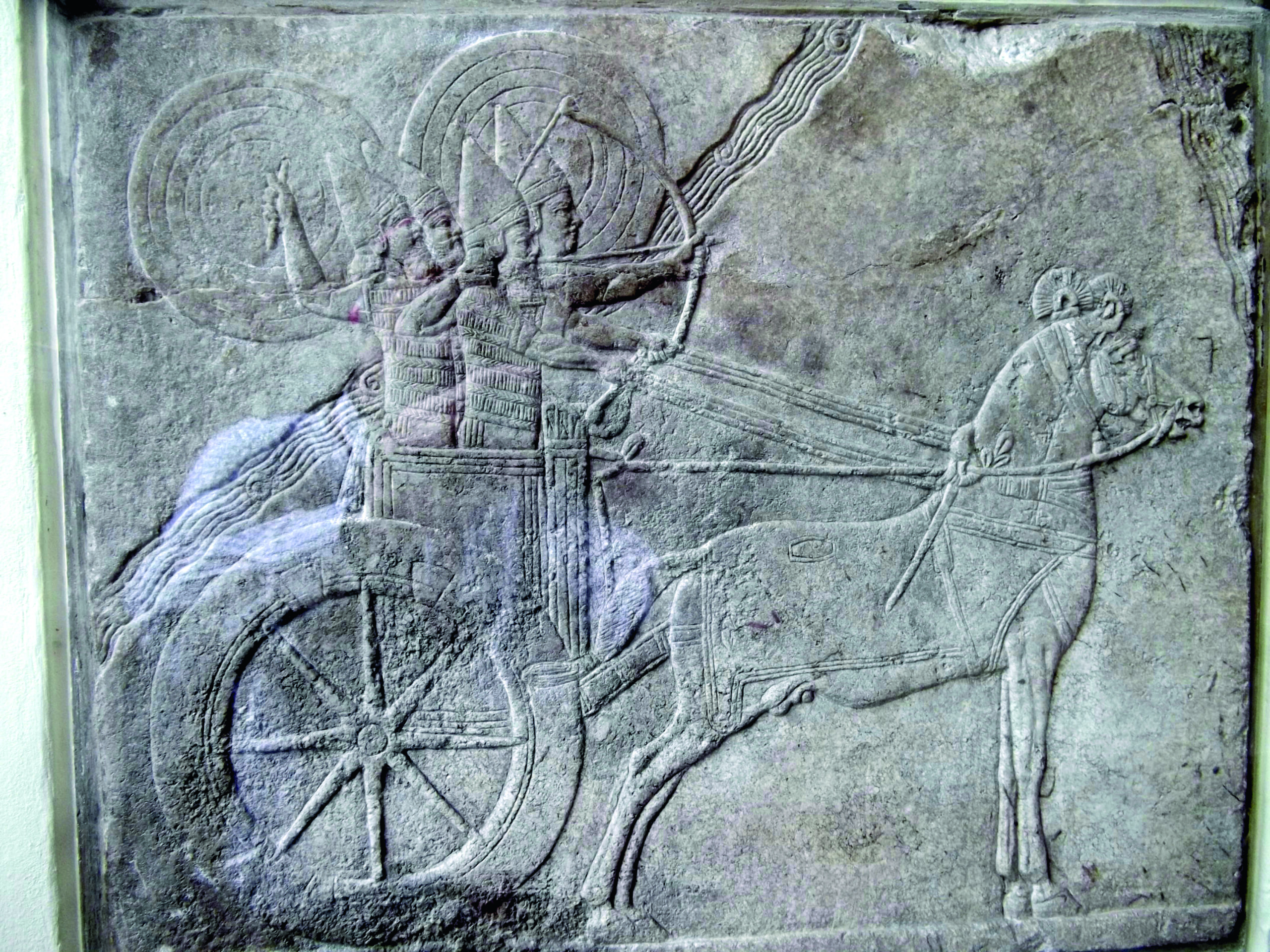
Media was a province in present-day Iran, so the ‘Medes’ likely refer to the Persians, but the term was also used for the Scythians and Cimmerians, all known for their skill with the bow and arrow. The latter are sometimes also identified with the northern people whom God wants to call to the land of Israel to punish those who have fallen away from the faith: ‘Whose arrows are sharp, And all their bows bent; Their horses’ hooves will seem like flint, And their wheels like a whirlwind.’ (Isaiah 5:28).
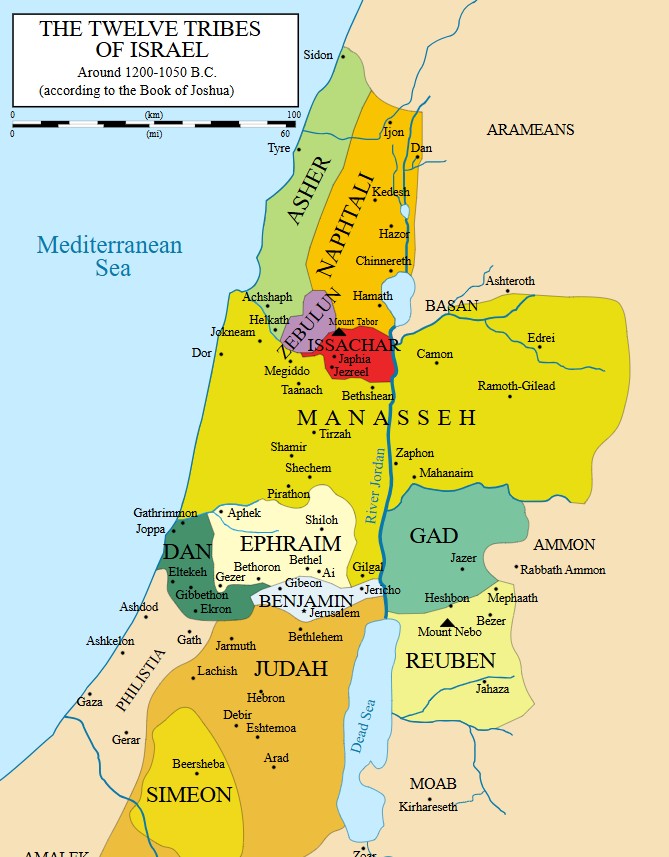
Several Hebrew tribes are also described as skilled archers in the Old Testament: ‘The sons of Ulam were mighty men of valour – archers. They had many sons and grandsons, one hundred and fifty in all. These were all sons of Benjamin.’ (1 Chronicles 8:40).
‘And Asa had an army of three hundred thousand from Judah who carried shields and spears, and from Benjamin two hundred and eighty thousand men who carried shields and drew bows; all these were mighty men of valour.’ (2 Chronicles 14:8). As is almost always the case with ancient sources, these numbers should not be taken literally. The Benjaminites are repeatedly described as archers, but the tribe was the smallest of the twelve and numbered only 45,600 people 200 years after the death of its patriarch (according to Numbers 26:41).
‘The sons of Reuben, the Gadites, and half the tribe of Manasseh had forty-four thousand seven hundred and sixty valiant men, men able to bear shield and sword, to shoot with the bow, and skilful in war, who went to war.’ (1 Chronicles 5:18).
The common mention of sword and bow, with or without shield, is found in numerous places, for example in the blessing that Jacob, called Israel, gives to his son Joseph and Joseph’s sons Ephraim and Manasseh: ‘Then Israel said to Joseph, “Behold, I am dying, but God will be with you and bring you back to the land of your fathers. Moreover I have given to you one portion above your brothers, which I took from the hand of the Amorite with my sword and my bow.”’ (Genesis 48:21-22).
In the battle against the Arameans, Joram, the king of Israel, asks the prophet Elisha whether he should have the prisoners executed. ‘But he answered, “You shall not kill them. Would you kill those whom you have taken captive with your sword and your bow?”’ (2 Kings 6:22).
Biblical Archers
Furthermore, several prominent figures are associated with bow and arrow. Jacob says of his son Joseph: ‘The archers have bitterly grieved him, shot at him and hated him. But his bow remained in strength, and the arms of his hands were made strong by the hands of the Mighty God of Jacob.’ (Genesis 49:23-24).
Nimrod was a great-grandson of Noah and the first to rise to kingship: ‘Cush begot Nimrod; he began to be a mighty one on the earth. He was a mighty hunter before the Lord; therefore, it is said, “Like Nimrod the mighty hunter before the Lord.”’ (Genesis 10:8-9). He founded Babel and initiated the famous Tower of Babel, which provoked the aforementioned wrath of God. Later, he extended his rule to Assyria and founded, among other places, Nineveh. Attempts to identify him with a real ruler, such as the Egyptian King Amenhotep III (r. c. 1388–1351 BCE), who was known as a great hunter and extended his empire as far as Mesopotamia, have proven unsuccessful.
Ishmael was the illegitimate son of Abraham and his slave Hagar, who were driven into the desert: ‘Then she departed and wandered in the Wilderness of Beersheba. And the water in the skin was used up, and she placed the boy under one of the shrubs. Then she went and sat down across from him at a distance of about a bowshot; for she said to herself, “Let me not see the death of the boy.” So she sat opposite him, and lifted her voice and wept.’ (Genesis 21:14–16). But they were rescued by an angel: ‘So God was with the lad; and he grew and dwelt in the wilderness, and became an archer.’ (Genesis 21:20).
Ishmael fathered twelve sons, who are considered the ancestors of the Arabs (Genesis 25:12-18). His daughter Mahalet later became the wife of Esau, a grandson of the patriarch Abraham, who was also a great archer and hunter. One day, returning hungry from the hunt, he sold his birthright to his brother Jacob for a bowl of lentil stew (Genesis 25:29-34).
In his old age, Isaac, Esau’s father, wanted to bless his son: ‘Then he said, “Behold now, I am old. I do not know the day of my death. Now therefore, please take your weapons, your quiver and your bow, and go out to the field and hunt game for me. And make me savoury food, such as I love, and bring it to me that I may eat, that my soul may bless you before I die.”’ (Genesis 27:2-4). Esau did as he was told, but was later cheated out of the blessing by his mother and brother.
Death by Arrow
In biblical tradition, Saul is considered the first king of Israel, under whom the twelve tribes were united in the 11th century BC. His sons are killed in the battle between the Israelites and the Philistines in Mount Gilboa. ‘The battle became fierce against Saul. The archers hit him, and he was severely wounded by the archers.’ (1 Samuel 31:3). After his armour-bearer refuses to deliver the coup de grâce, Saul throws himself on his sword. The victorious Philistines hang his body on the wall of Beth-She’an, later Scythopolis, where Ptolemy II stationed units of Scythian horsemen in the 3rd century BC.
Although he disguised himself to avoid being recognised as the King of Israel, Ahab also died from an arrow, this time in battle against the Arameans: ‘Now a certain man drew a bow at random, and struck the king of Israel between the joints of his armour. So he said to the driver of his chariot, “Turn around and take me out of the battle, for I am wounded.”’ (1 Kings 22:34).
Ahab’s son, the aforementioned King Joram, was rebelled against by his commander Jehu, who was proclaimed the new king by his loyal warriors and anointed by Elisha. Joram met with him in a field to learn the latest developments in the war: ‘Now it happened, when Joram saw Jehu, that he said, “Is it peace, Jehu?” So he answered, “What peace, as long as the harlotries of your mother Jezebel and her witchcraft are so many?” Then Joram turned around and fled […] Now Jehu drew his bow with full strength and shot Jehoram between his arms; and the arrow came out at his heart, and he sank down in his chariot.’ (2 Kings 9:22-24).
Josiah, king of Judea, also died from an arrow. Egyptian archers of Pharaoh Necho killed him in 608 BC at the Battle of Megiddo (2 Chronicles 35:23-24). These examples show that the bow and arrow, as well as chariots, played a significant role on both sides in the wars of the Israelites and Judeans against their Syrian, Persian, Egyptian, or Babylonian neighbours.
What kind of bows?
However numerous and varied the biblical passages are, they unfortunately provide no clues as to the type or form of bows used. Nor are there any pictorial representations or archaeological finds from the period in question that can be definitively attributed to the tribes of Israel or Judea.
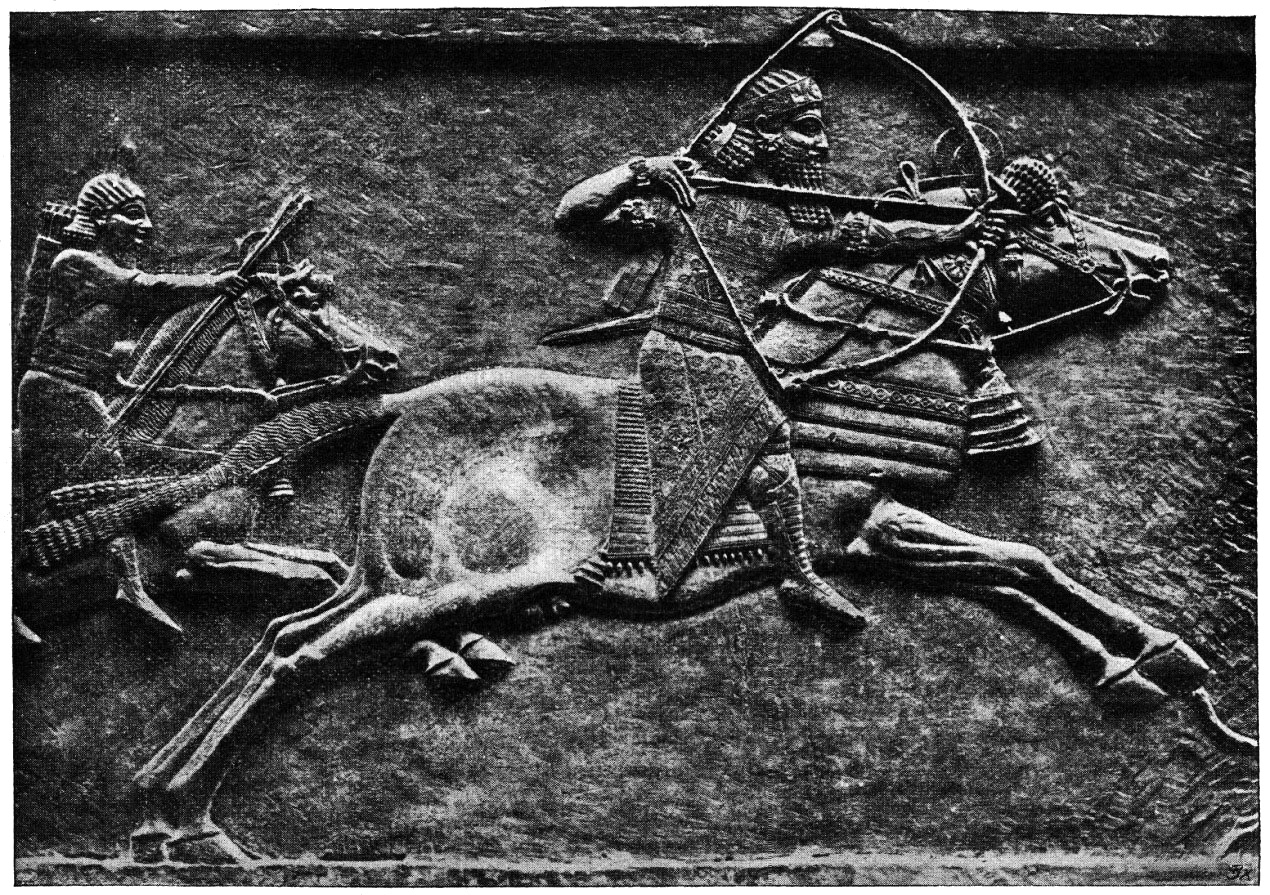
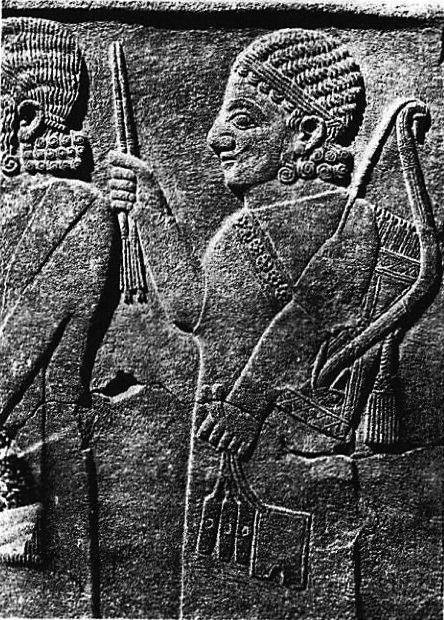
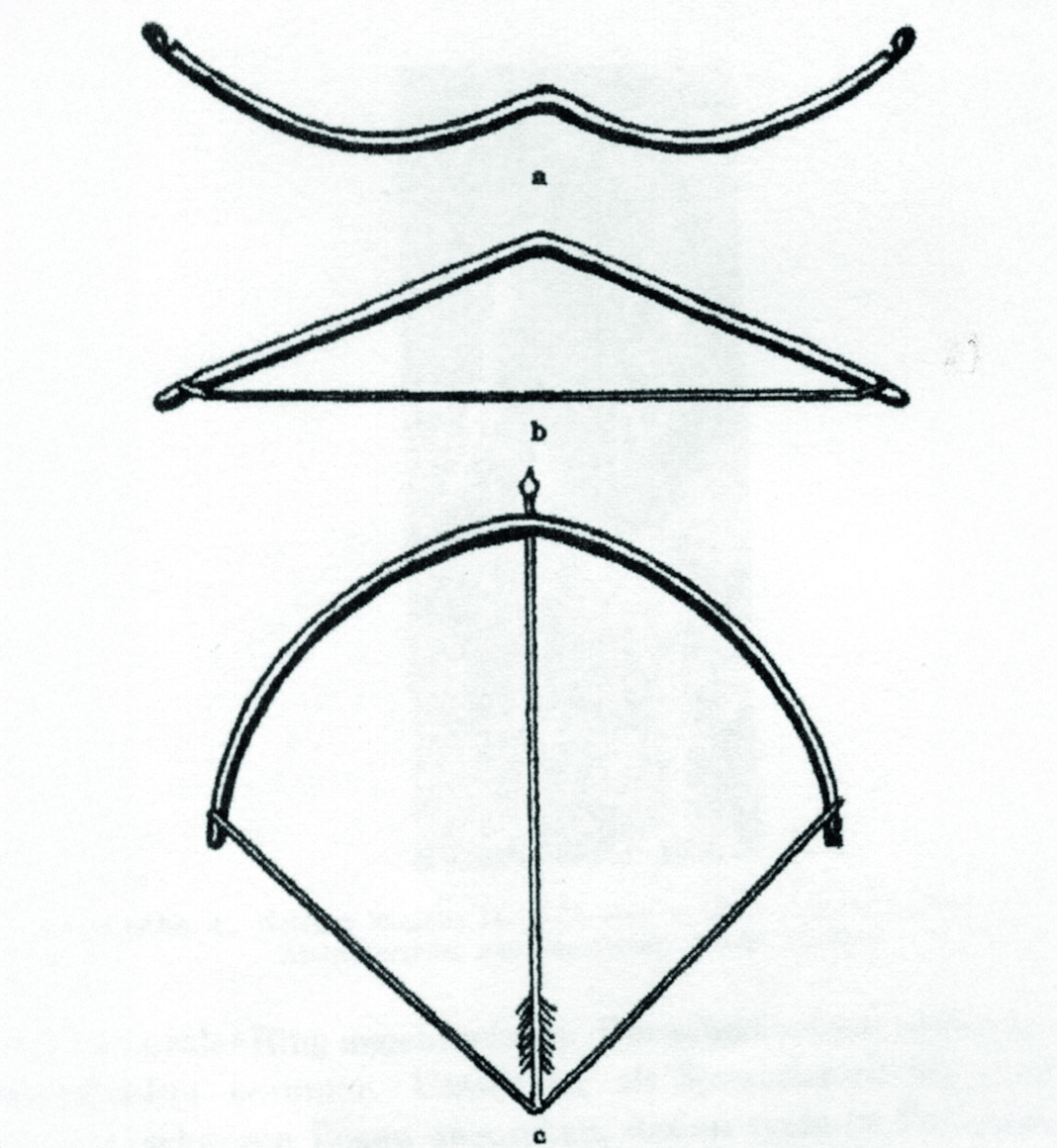
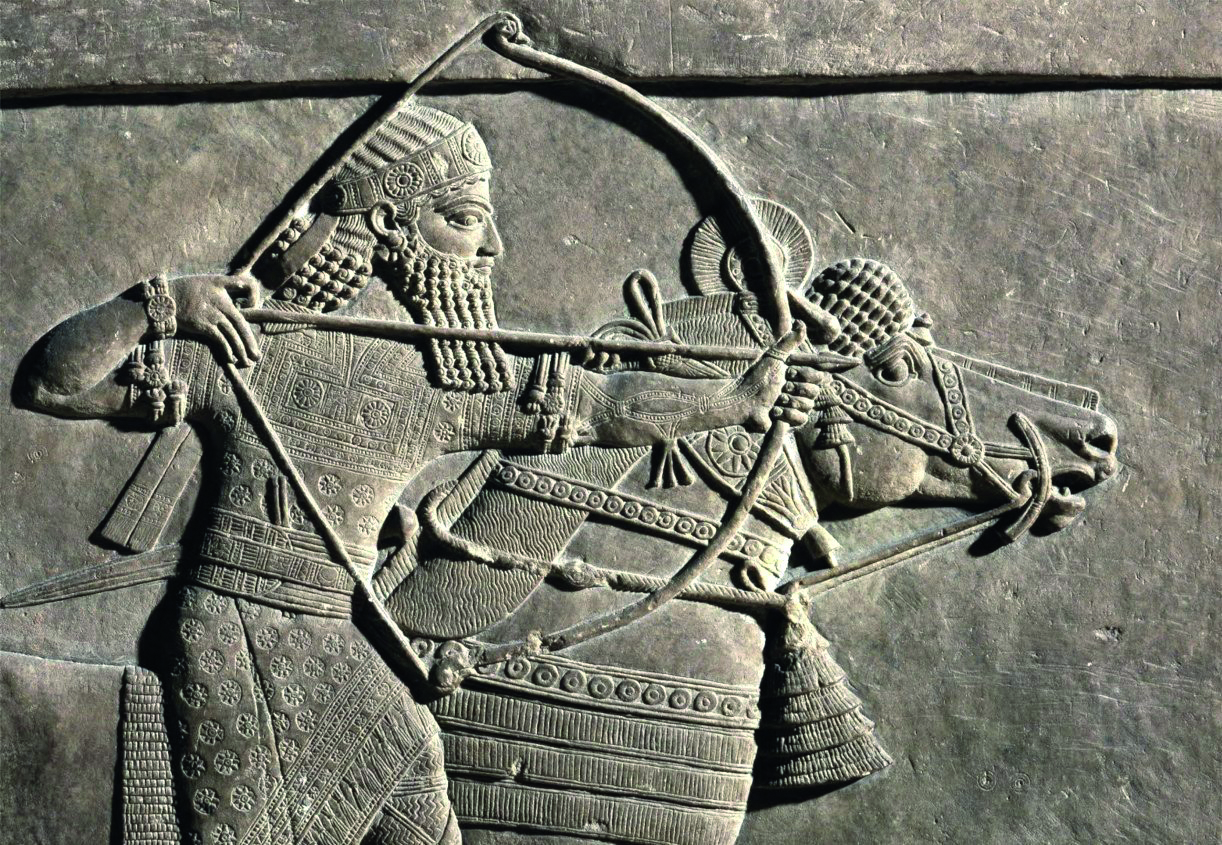
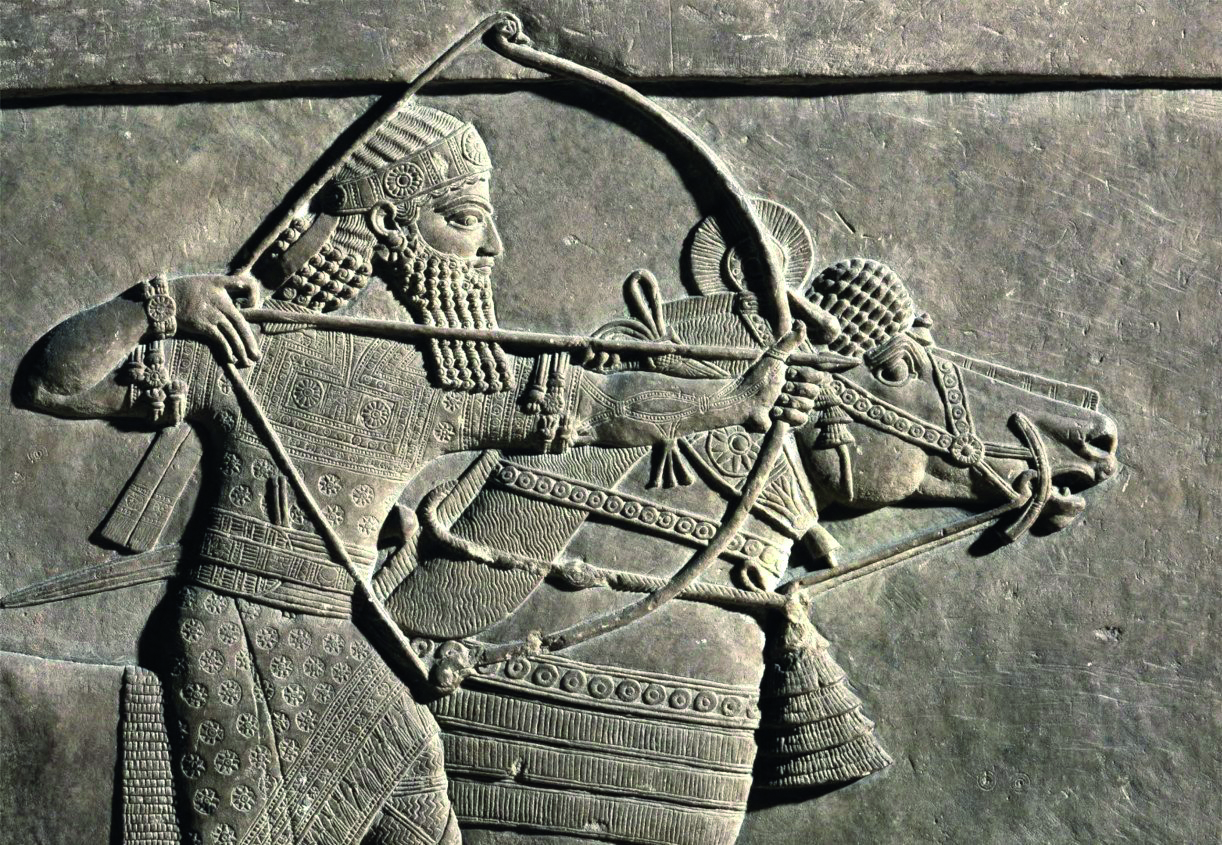
Evidence from neighbouring peoples with whom they had some form of contact, such as Egyptians, Assyrians, Babylonians, Persians, and others, is not uncommon. This evidence mostly consists of stone reliefs depicting rulers, hunts, or battles. These predominantly show so-called angular bows, an early form of composite construction, of which only a few examples have survived, for instance, in the tomb of Tutankhamun (r. c. 1332–1323 BCE). A typical feature is the sharp bend in the middle, pointing away from the archer, where the limbs meet. The bow is held below this angle, which loses its sharpness when drawn but never disappears completely. Reconstructions by Helmut Mebert and Edward McEwen, among others, have shown that these are fully functional bows, even if not of overwhelming power.
That this form was also known in historical Israel is demonstrated by a find in the “Tomb of the Warrior” in a cave in Wadi el-Makkuk near Jericho. Although it is a purely wooden bow made of olive wood, it clearly exhibits the typical angular shape. It was probably deliberately broken, likely in the context of a burial ritual. It is assumed that this was not a functional bow, but rather a symbolic substitute placed in the tomb with the deceased instead of an original.
The finds from el-Makkuk are dated to approximately 3800 BCE, thus originating long before the events of the Old Testament and their writing from the 9th century BCE onward. They do, however, demonstrate that the angular bow form was already well-known in the area of historical Israel at that time and was probably, as in neighbouring regions, the dominant type of bow.
Bronze bows are mentioned several times in the texts of the Old Testament. While some experts believe it would have been possible to produce functional bronze bows, these would likely have had significantly weaker shooting performance than contemporary composite and probably also wooden bows, while being quite heavy and being complex and expensive to manufacture.
It is conceivable that bronze bows were used as processional weapons, votive offerings, or perhaps even as devices for building or demonstrating strength. It is also not entirely out of the question that some bows were decorated with bronze fittings. However, the passages in which bronze bows are mentioned are all more or less metaphorical in nature, suggesting that they were simply meant to express the weapons’ particular strength.
For example, in King David’s famous song of thanksgiving, it says: ‘He teaches my hands to make war, so that my arms can bend a bow of bronze.’ (2 Samuel 22:35; Psalm 18:35). In some versions, steel, copper, or brass—depending on the translator—is used instead of bronze.
Similarly, in Job: ‘When he is about to fill his stomach, God will cast on him the fury of His wrath, And will rain it on him while he is eating. He will flee from the iron weapon; A bronze bow will pierce him through. It is drawn, and comes out of the body; Yes, the glittering point comes out of his gall. Terrors come upon him.’ (Job 20:23–25).
This is not the only instance where God himself appears as an archer. More on the metaphorical and mantic use of the bow and arrow in the second part of this article.
References:
Edmund Bulanda: Bogen und Pfeil bei den Völkern des Altertums, Vienna 1913 (Abhandlungen des Archäologisch-Epigraphischen Seminars der Universität Wien, 15. Heft = Neue Folge, 2. Heft).
David F. Hill: An Archer Looks at the Bible, Edinburgh et al. 1994.
Edward McEwen: The Bow, in: Tamar Schick (ed.), The Cave of the Warrior: A Fourth Millennium Burial in the Judean Desert, Israel Antiquities Authority Report vol. 5 (1998), pp. 30–33.
Helmut Mebert: Der assyrische Angular-Bogen als Kriegs- und Jagdwaffe, in: Zeitschrift für historische Waffen- und Kostümkunde NF VI (1937), pp. 96–100.
Jan H. Sachers: Pfeil und Bogen in der Bibel. Teil 1, in: Traditionell Bogenschießen 112 (May 2024), pp. 66-71.
Tamar Schick: The Arrows, in: Schick (ed.), Cave, pp. 45–53.
All images supplied by Jan H. Sachers