

Kristina Dolgilevica: 11,000-year-old willow bow, its experimental replicas and function
The Mesolithic Settlement of Star Carr
Source – (Copyright Star Carr Project, CC BY-NC 4.0).Screenshot
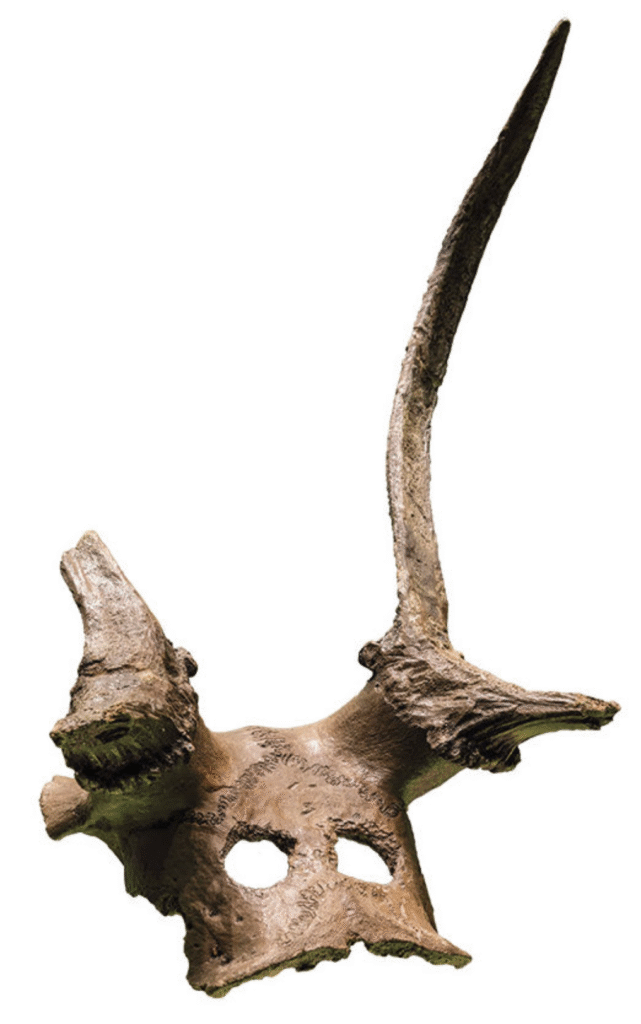
Star Carr is the name given to an ancient settlement that was built on the edge of a prehistoric lake near Scarborough, North Yorkshire, England. As one of the world’s most important archaeological sites from the Mesolithic (Middle Stone Age) period, it was first occupied some 11,000 years ago. Thirty-eight wooden artefacts were found at the site, but only two were complete: a digging stick (a gathering tool) and a bow (a hunting tool). This bow is the oldest and most intact bow to ever be found dating back to that period, and it is also one of the oldest hunting bows in Northern Europe. Among the other world-famous and rare objects from this site are the spectacular red deer headdresses. A total of 33 of these bone and antler objects were found; while no other headdresses of this kind have ever been discovered in Britain, a handful were found in Germany. These are thought to have functioned as ritualistic objects, or as aids in hunting, helping the hunters blend in with the native deer.
The Star Carr community of post-Ice Age hunter-gatherers engaged in hunting, fishing, and boating activities. To support these activities, the settlers constructed three large wooden platforms on the edge of the lake to help stabilise the mud along the shore, easing their access to water. Furthermore, Star Carr is a site where the first known houses were built in Britain, and it is a place that gives us the first evidence of carpentry in Europe. However, the site is vast, and it is beyond the scope of this article to do it justice.
Image: 33 deer sculls were found at Star Carr
Source – copyright Museum of Archaeology and Anthropology, Cambridge
To learn more about the site in detail, its layout, archaeological discoveries, and preservation, you can visit the official website of the Yorkshire Museum. Because the bow is the star of this article, we will focus the remainder of our attention on Clark’s area, where the bow was located.
The Site: Archaeological Excavations
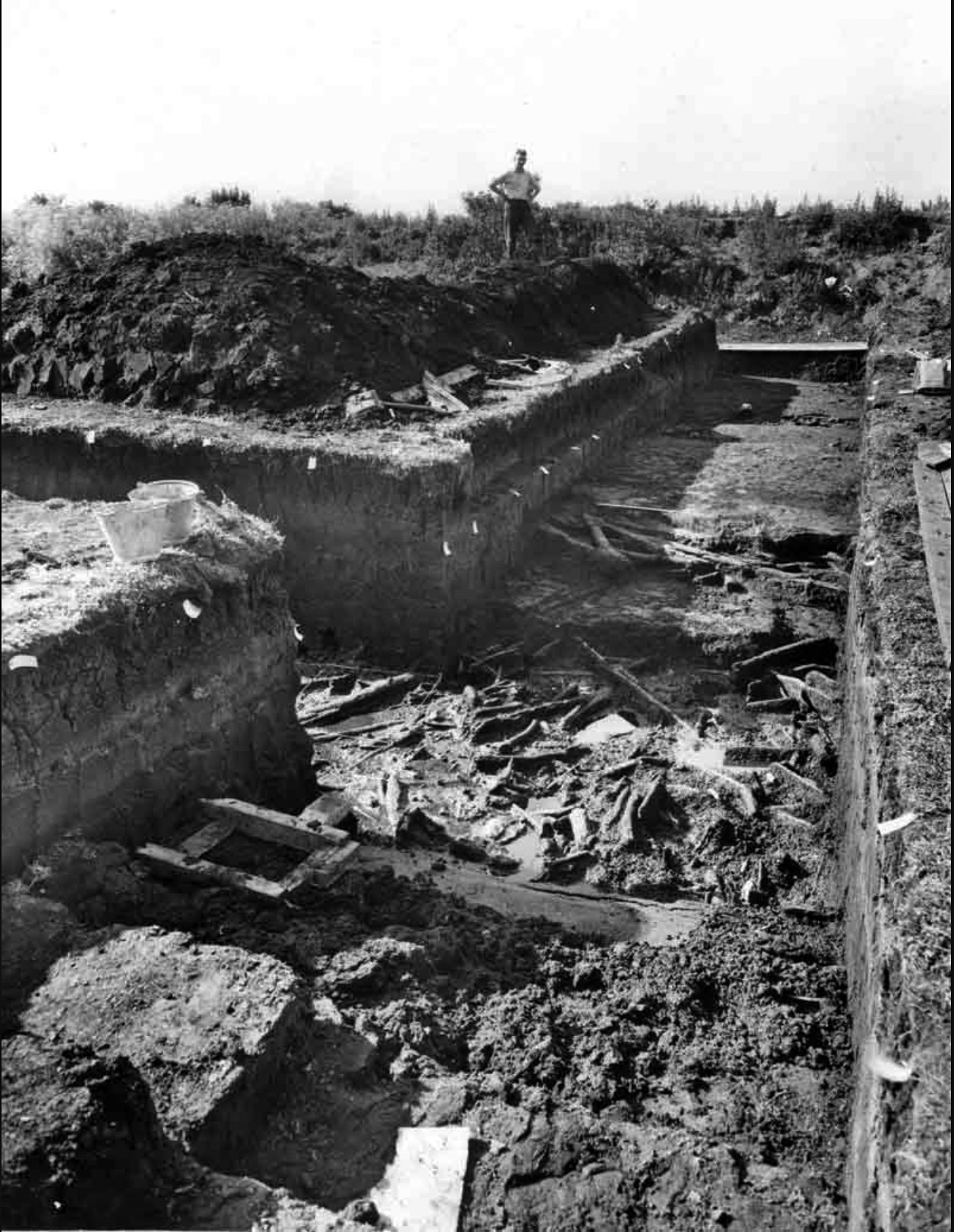
The Star Carr site was located by a local amateur archaeologist, John Moore, who found ten sites in the area from 1947. Initial small, localised excavations in 1948 yielded some flint, bone, and antler; soon after that, Grahame Clark (1907–1995), a lecturer in Prehistory at the University of Cambridge, was contacted, and major, systematic excavation work truly began. Lasting about two years, Clark’s efforts unearthed an amazing array of artefacts. It was during his campaign, which focused on what would have been the lake shore, that the wooden platforms were discovered. A whole host of animal bones, from red deer, roe deer, wild boar, elk, aurochs (wild cow), birds, beaver, pine marten, hedgehog, hare, badger, and a wolf (later thought to be a domesticated dog), were uncovered. Furthermore, 21 of the 33 deer headdresses were discovered during his tenure. Various flint artefacts were found, including arrowheads, which served as evidence of hunting activities. The antler barbed points varied in size, many likely used as spear points, and astonishingly, 193 of these make up roughly 97% of all that have ever been found in the UK. Other smaller, follow-up test pits and trenches were dug to define the site’s boundaries in 1977, 1985, and 1989; the area that would have been the lakeshore where Clark conducted his work was named in his honour. However, the bow was yet to be found during the later major excavations between 2004 and 2015, which were led by archaeologists from the universities of York, Chester, and Manchester.
Source – Scarborough Archaeological and Historical Society
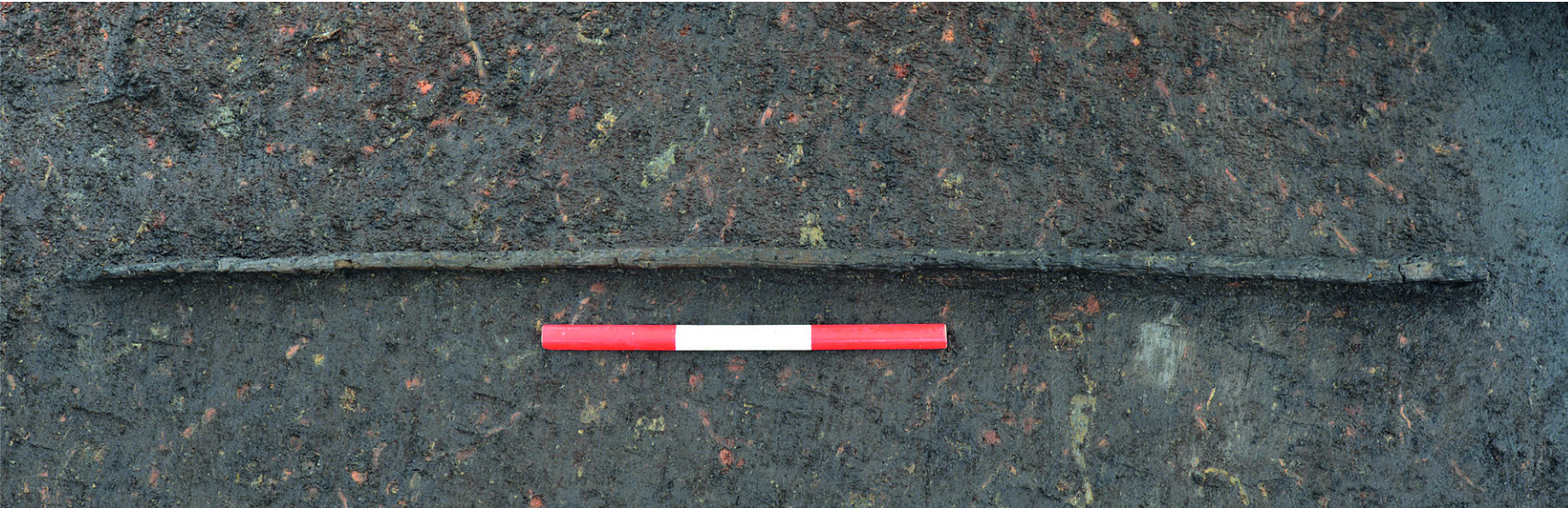
The Bow: Artefact <113300>
Recovered from a reed peat context near the lake edge in Clark’s area, Artefact <113300> was initially misidentified as a digging stick before full excavation revealed it to be a 1411 mm long, double-pointed bow. The first-stage 2010 excavations were partial, hence the misidentification; however, the next stage of work in that trench area in 2015 unearthed the artefact fully, leading to its proper identification. The stave bow was carved from a willow sapling about 70 millimetres wide, crafted from a straight-grained willow pole. The sub-oval bow features slender, un-notched limbs and a burnished surface with faint faceting. The bow at Star Carr is small and slim, fast to use on the go, and easy to carry. From the animal bones excavated, it is clear that the Star Carr people ate a range of animals, birds, and fish; this particular bow design would have been perfect for hunting small birds and animals, as well as fish around the settlement. The bow is aligned with the growth rings running side to side across the width of the bow stave; where visible, the growth rings are fairly uniform in development, averaging 2.5 to 3.0 mm in width. This orientation takes advantage of the natural strength of the tree, with the springy sapwood stretched on the outside (back of the bow), whilst the harder heartwood is compressed on the inside (belly) of the bow. Structurally, the bow limbs display slight asymmetry, but the surface is finely worked with faint tool facets, indicating it was smoothed by burnishing. This represents exceptional craftsmanship for the time period, and other wooden artefacts show that the woodworkers of Star Carr were very competent and prolific. Although the bow string did not survive (having been removed completely or decaying over time), most strings at the time would have been made out of animal or plant fibres. Probably using either rawhide made from animal skins or string made from tree-bark bast, the bow would have been shot with wooden-tipped arrows with flint, bone, or antler points.

The Bow: Tool or Totem?
The digging stick and the bow were placed tip-to-tip and lay in shallow water, approximately 15 metres away from the edge of the ancient lake. Interestingly, archaeologists and those analysing the site have entertained the idea that these two objects may have been part of a structured deposition. This means that, in contrast to the very many broken objects scattered randomly on-site, these two mostly intact objects were not positioned by accident. The signs of organised, structured depositions suggest that these everyday objects may have carried ritualistic, symbolic, or religious significance. This hypothesis has strong grounds, given that other ritualistic and totemic artefacts, such as the deer headdresses, were unearthed in considerable quantities. Mesolithic peoples in general are known for placing high importance on water, rivers, and lakes, frequently depositing animal remains and functional tools as offerings. Moreover, the bow and the digging stick of Star Carr do not show signs of wear, which further supports their function as ritualistic items.
Fishing for Evidence
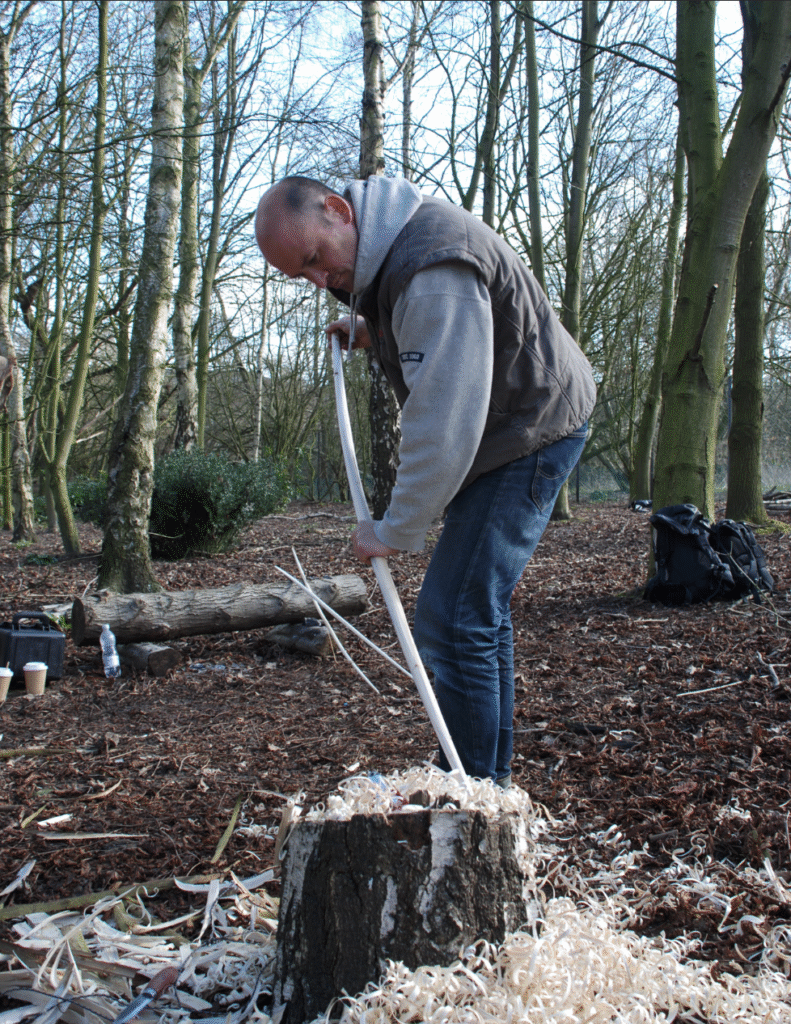
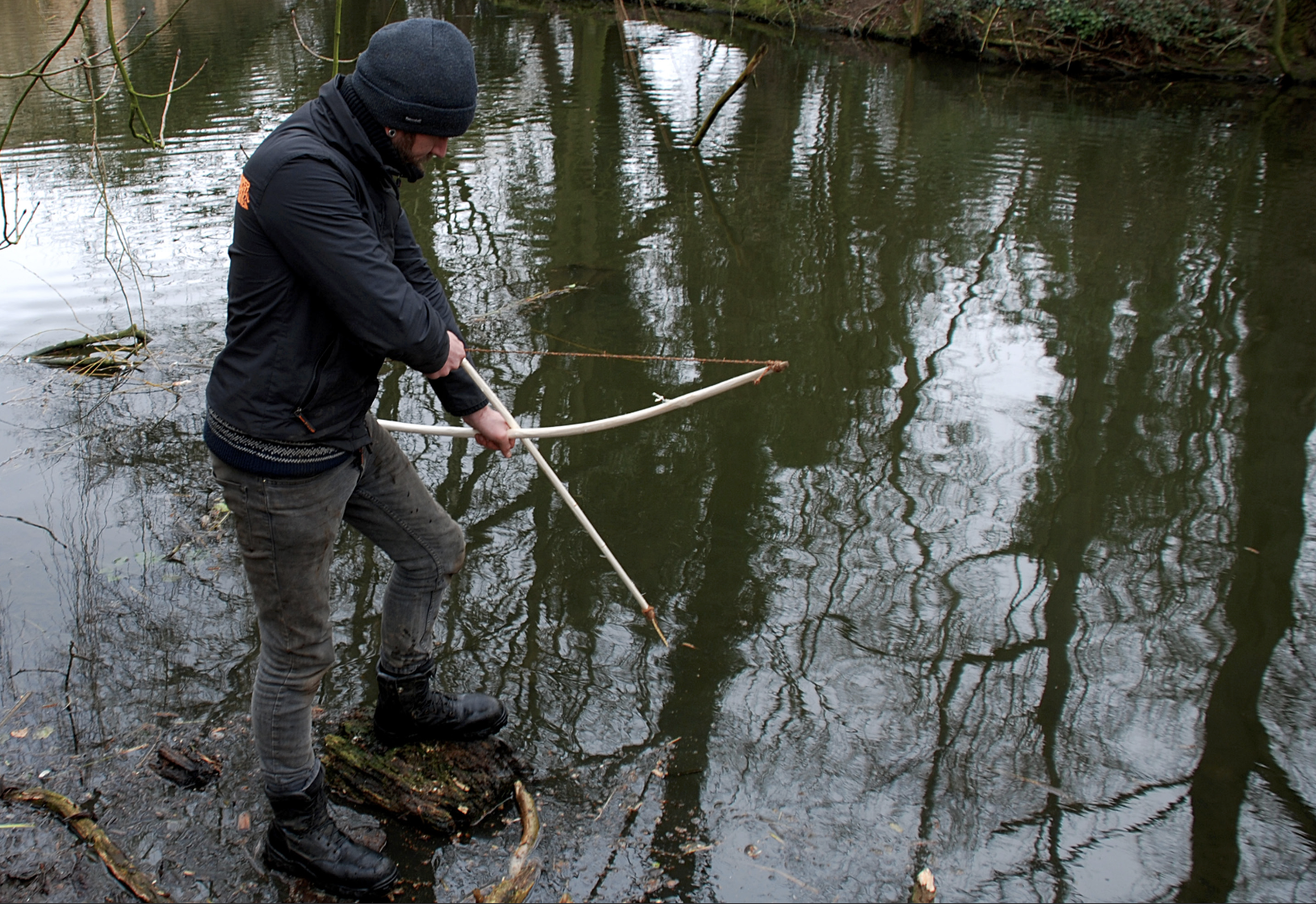
A series of experiments was conducted by the researchers to test the potential of the bow artefact. Three distinct replicas were made; the ‘idealised’ version was initially created to evaluate how willow performs as a bow-making material. Though in contrast to the original geometry of artefact <113300>, the ‘idealised’ test model featured perfectly symmetrical limbs, and the outer growth ring on the back was left uncut. Following success in the initial model testing, two faithful replicas were produced: Replica A, engineered to match the exact dimensions of the excavated artefact, and Replica B, crafted with a thickness of up to 30% greater along the belly-to-back plane (the vertical axis as it lay in the ground) to compensate for potential soil compression over millennia. All three replicas were strung with cordage made from twisted linden bast fibre.
Image: Flexing the bow during its production to test its strength.
Source – (Copyright Aimée Little, CC BY-NC 4.0).
Of course, no piece of wood is identical, meaning minor natural wood grain and shape adaptations had to be made by the bowyer to shape the raw timber. This naturally produced a slight variance between the planned and final dimensions (see table). As a result, Replica B ended up closely mirroring the original artefact <113300> in width and thickness. It took the experienced woodworker using stone tools 1.5 hours to craft the Replica B bow. The tests demonstrated that it could shoot an arrow tipped with a barbed point 25 metres along the ground and 15 metres straight up into the air. They also used it to shoot through a dead fish in the water, and when shot into a tree, the arrow could not be retrieved due to the nature of the barbed arrowheads. Though the poundage output was low, which rules out large game hunting, it also rules it out as a child’s toy, though it could still theoretically serve as a practice bow for a youngster. However, the likelihood of the bow being used for bow fishing far outweighs all the other educated guesses, on the basis that the bows shot well at near point-blank range, penetrating the flesh when paired with appropriate arrowheads.
Source – (Copyright Aimée Little, CC BY-NC 4.0)
Is It Really the Oldest Bow?
We know from flint arrowheads found in various parts of the world that bows have likely been in use since as early as 70,000 years ago, but the oldest complete bow found to date is the one at Star Carr. However, Star Carr is not the only site to yield ancient bows, nor does it contain the oldest bow fragment.
Potentially the oldest known bow from Northern Europe, dating to c. 18,000 years ago, is a fragment of pine (Pinus sp.) recovered from the French site of Mannheim-Vogelstang. However, this attribution is generally considered to be unconvincing. Two fragments of potential bows were also recovered from the German site of Stellmoor. These were made from pine and accompanied by more than 100 fragments of arrows. Unfortunately, the assemblage was destroyed by bombing during the Second World War, meaning that the only data available are derived from the original publication (Rust, 1943). Whilst the arrows appear to be unequivocal in terms of form, the bows are generally considered to be unconvincing. Prior to the discovery of the bow from Star Carr, the oldest, irrefutable examples from Northern Europe were recovered from Holmegård in Denmark. In total, the remains of five bows were recovered, dated to the younger Maglemose culture (Becker, 1945). At least two of the bows were constructed from elm (Ulmus sp.) and measured 1540 mm and 900 mm respectively (Becker, 1945). A slightly younger example was recovered from Ulkestrup Lyng (Andresen et al., 1981). Here, one side of an elm bow had been charred prior to deposition; the pointed end is flat and there is no evidence of a notch (Andresen et al., 1981). However, an examination of the literature has demonstrated that at least one possible pine bow was recovered at Friesack IV from a middle Preboreal context (Gramsch and Kloss, 1989). This example was incomplete, measuring c. 300 mm in length. From Russia, the Early Boreal site of Veretye I has produced bows with indentations for affixing the string (Oshibkina, 2007). Similarly, at least six bows (potentially eight) are known from the site of Vis I. These examples were smaller when compared with numerous other Mesolithic examples and were interpreted as being used for boring antler and bone or for making fire (Burov, 1989).
Mesolithic Dilemma
Determining Mesolithic artefact usage is problematic because not only were they often multi-functional or reused by hunter-gatherer successors, but they were also mostly made of organic materials. Composite tools (consisting of a wooden handle and stone tip glued in with resin, for example) also fell prey to natural disintegration over time, leaving archaeologists guessing what the function of the surviving stone remnants (microliths) originally was. Hunter-gatherers frequently favoured a nomadic lifestyle, leaving artefacts scattered rather than “dumped” into a single “ancient” rubbish site, making it hard to connect and relate objects to one another. Because Mesolithic sites are frequently located in acidic soils, materials like wooden spears, antler harpoons, woven baskets, and leather garments decompose completely, leaving only the stone remnants. Star Carr is a world-class site that continues to produce a wealth of information. Though the official excavations of the site were closed in 2015, many people, including experimental archaeologists, continue to conduct their work off-site.
To learn more about Star Carr visit: